» NACLA Interviews

NACLA Interviews

July 12, 2011
NACLA

“The roots of the War on Drugs go deep in Mexico. In fact, in some ways, they are deeper there than in the United States,” explains historian Isaac Campos in the most recent issue of NACLA. In order to better understand the forces behind drug prohibition in Mexico, NACLA spoke with Campos, who discussed the recent NACLA article, his forthcoming book, and his experience covering marijuana, prohibition, and drug culture in Mexico and the United States.

June 21, 2010
Marcial Godoy-Anativia

NACLA remembers the life of Mexican writer Carlos Monsiváis, who died June 19. This interview with Monsiváis, titled "We Are Living in a Time of Pillage," was originally published in the January/February 2007 issue of NACLA Report on the Americas.

June 7, 2010
Paola Reyes

Aggression against journalists in Mexico often gets lost in the murky impunity of the country’s violent drug war. However, a report by Mexican freedom-of-the-press organizations asserts that 65% of attacks on journalists have been not at the hands of drug cartels, but rather at the hands of the state. This interview is with independent journalist and writer Laura Castellanos. On May 10 still-unknown assailants ransacked her apartment, stealing only her laptop and reporter's pad, while leaving other items of value behind. Castellanos's experience is only one more incident in the recent surge of violence against journalists in Mexico, the most dangerous place for the profession in Latin America, according to Reporters Without Borders.

March 15, 2010
Jason Tockman

On March 7, NACLA Research Associate Jason Tockman interviewed Pablo Solón, Bolivia's ambassador to the United Nations. Solón brought his unique combination of both grass-roots economic-justice activism and his more recent official background under the Evo Morales administration to the interview. With this broad experience he takes on myriad topics, stressing that Latin America is finally moving away from the claws of the Monroe Doctrine, and beginning to define its own future, despite what happened in Honduras. This has had a direct impact on Bolivia as it continues to move forward with its own particular challenges.

June 18, 2009
Translated by Justin Delacour

Correa says that Ecuador's government-backed “Citizens’ Revolution” will accelerate at an intensifying pace over the next four years. With a majority in the National Assembly and a Constitution that was drafted and approved during his first government by a broad convergence of allied forces, his path seems wide open. He also promises to work with other South American governments to create an alternative financial architecture for the region.

March 25, 2009
Fred Rosen

Alan Knight, a specialist on the Mexican Revolution, once wrote, “Revolutionary generations die, but the legacy of (especially successful) revolutions is never entirely spent." In this interview, he discusses revolutionary icons, the competing claims to revolutionary legitimacy by contemporary political actors, and official amnesia over tensions within the revolution, among other topics.

February 10, 2009
Stuart Schrader

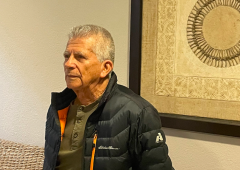
Eduardo Joly is a sociologist, wheelchair user, and President of Fundación Rumbos, a nongovernmental organization in Argentina that focuses on accessibility from a human-rights perspective. He is a founding member of the Disability Rights Network in Argentina and Visiting Professor and Researcher, Postgraduate Program on Disability, at the University of Buenos Aires Law School. He is also a former NACLA staff member, from the late 1960s to early 1970s.

September 11, 2008
Fred Rosen

Benedicto Martínez, a leader of Mexico’s Authentic Workers Front (FAT), talks to NACLA about the bleak prospects faced by workers in an age of global labor markets and an anti-labor state.

September 1, 2008
Nancy Romer

Casimira Rodríguez spent decades organizing her fellow domestic workers into a union, which she founded in 1985. When Bolivian Evo Morales was elected president of Bolivia, he tapped Rodríguez to become the nation's Justice Minister, a post she held for year. She spoke with Nancy Romer about her experience in government, the opposition to the government, the president's relationship with social movements, and even offered advice to U.S. workers.

June 20, 2008
Raphael Hoetmer

The Portuguese thinker says several events in Latin America have put the brakes on Washington's hemispheric agenda. At the root of this process, he says, is the unprecedented strength of social movements that led to the election of left-leaning Latin American governments at a time in which the U.S. was using the discourse of democracy to justify interventions around the planet.